Opportunities
Empowering youth and communities through scholarships, fellowships, trainings, and research
Digital Dangers & Opportunities
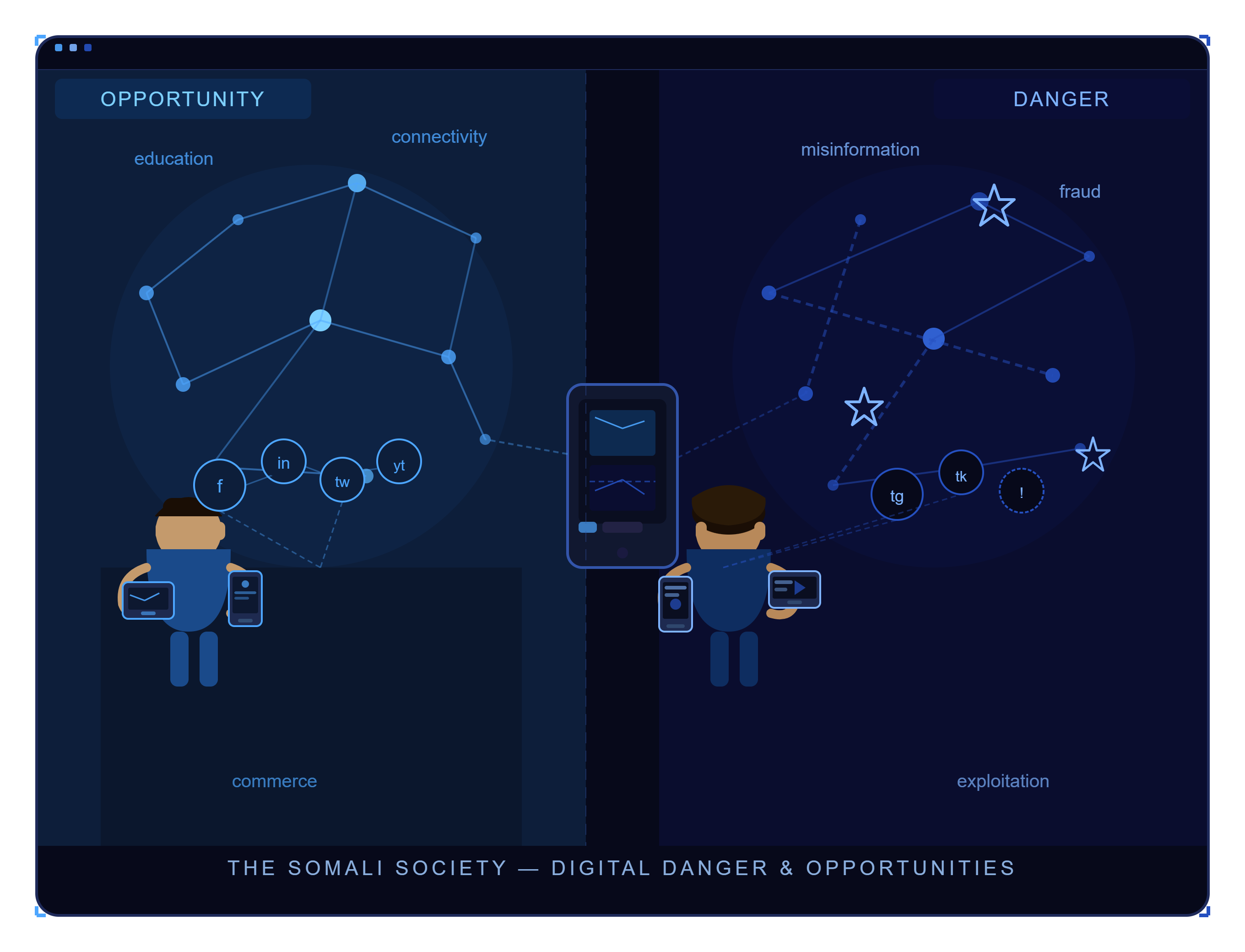
Both misinformation and disinformation are false or inaccurate information; however, the intent differs. Misinformation is shared without the intent to deceive, and the person sharing the information may believe it is true, however, disinformation is deliberately created and propagated to deceive people.
How to Identify and Counter Misinformation/Disinformation
- Clickbait and Sensationalism: Check outrageous claims with no evidence, headlines that don't match the article's content, and sites with unrelated ads or pop-ups.
- Deepfakes and Manipulated Media: Be cautious of unnatural lip movements or lighting issues, source verification, and claims of leaked content with no original source.
- Conspiracy Theories: Be aware of claims attacking institutions or people without proof, that employ "them" to villainize groups, and provide assertions that "everyone knows that except you."
- Misrepresented Statistics: Spot missing sample sizes or methodology details, graphs with manipulated axes, and quotes taken out of context from real studies.
- Suspicious URLs: Be cautious of URLs that seem like real sites (e.g., "nyt1ime.com" instead of "nytimes.com").
- Emotional Manipulation: Look for ALL CAPS headlines, excessive punctuation, and posts that want you to act fast without proof.
References
- Palfrey, J. (2025, March 28). Misinformation and disinformation. Encyclopedia Britannica.
- Somalia, D. (2025, January 1). How social media is a double-edged sword destroying Somali youth.
- Parker, C. (2024, August 5). Police scotch online lie that dog walker was killed by Somali migrants. The Times.
Scholarship Application Guide
This guide has been prepared by HornAidResilience Organisation (HARO) to support students from Somalia and across the Horn of Africa region in identifying, preparing for, and successfully applying to international scholarship opportunities.
Who This Guide Is For
- Secondary school graduates seeking undergraduate scholarships
- University students seeking master's or PhD funding
- Students with limited access to career counselling services
- Parents, teachers, and community mentors supporting applicants
Understanding Scholarship Types
By Funding Source
- Government-funded scholarships
- University-funded scholarships
- Organisation and foundation scholarships
- Regional and bilateral scholarships
By Coverage
- Fully-funded: Tuition, living stipend, travel, and insurance
- Partially-funded: Tuition only, or living costs only
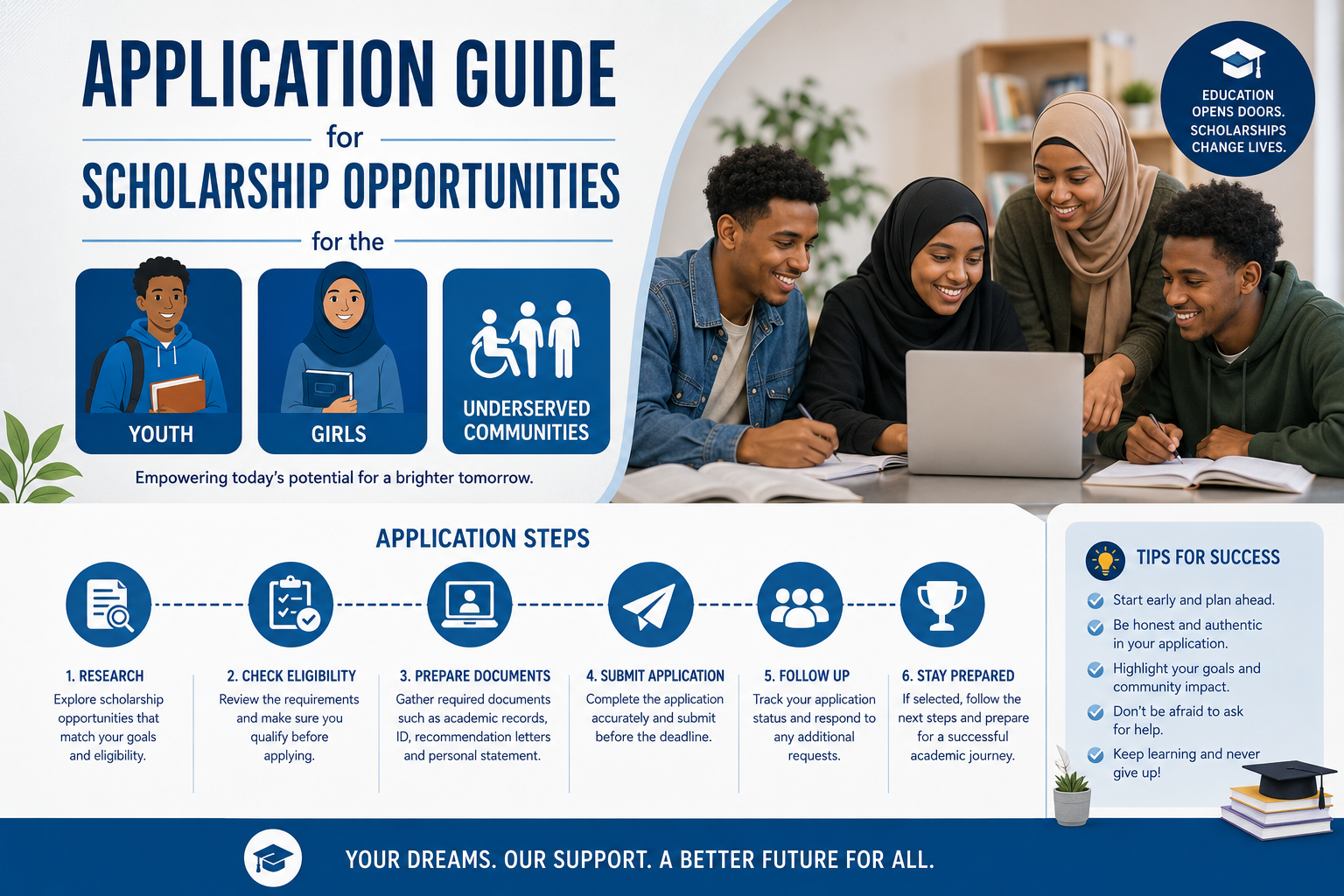
Step-by-Step Application Process
Step 1: Self-Assessment
Identify your field of study, career goals, and desired level of study. Assess your academic standing.
Step 2: Research Opportunities
Use credible sources like embassy websites, university admissions, and verified scholarship databases.
Step 3: Check Eligibility
Review academic transcripts, language proficiency, standardised tests, and nationality requirements.
Step 4: Prepare Documents
Prepare personal statement, CV, recommendation letters, academic transcripts, and language test scores.
Step 5: Complete Application
Create accounts on official portals, complete all sections, and submit before deadlines.
Step 6: Interview Preparation
Research the scholarship's mission, practice answering questions, and prepare thoughtful questions.
Document Checklist
- Valid passport
- Certified academic transcripts and certificates
- Language proficiency test results
- Personal statement / statement of purpose
- Two to three letters of recommendation
- Updated CV/resume
- Passport-sized photographs
- Proof of identity or birth certificate
Trainings, Conferences & Forums
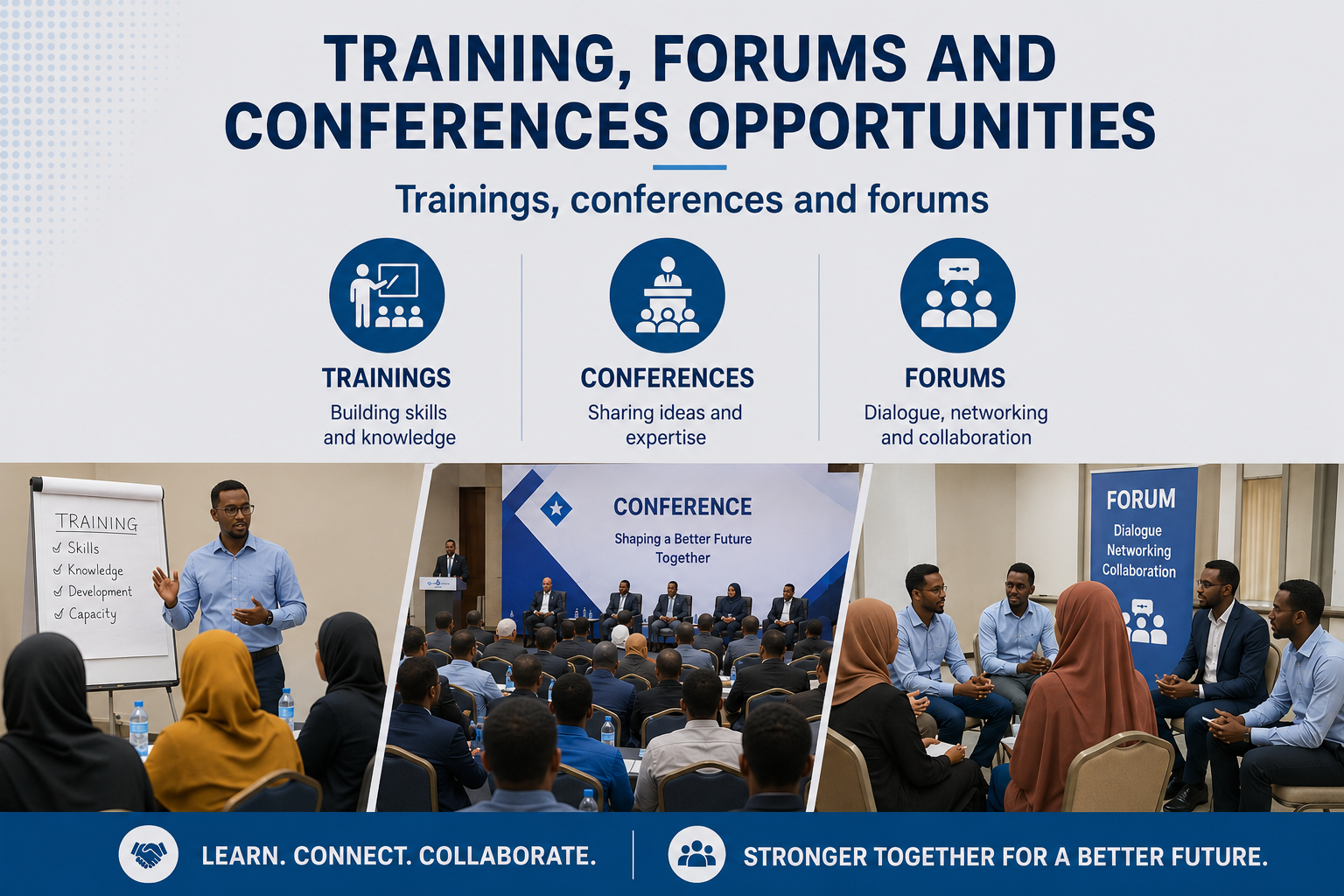
HARO's role as a connector bridges between opportunities and the communities it serves. HARO actively identifies international trainings, conferences, forums, scholarships, fellowships, and other development opportunities, and channels this information directly to young people across Somalia and the Horn of Africa, with particular attention to youth in underserved, remote, conflict-affected, and displacement-affected communities who are too often excluded from such opportunities due to limited access, information gaps, or lack of networks.
By proactively sharing these opportunities and supporting young people to access them, HARO works to level the playing field, ensuring that talent and potential — not privilege or proximity to information — determine who is able to benefit. This is paired with mentorship, guidance, and follow-up support, helping youth navigate application processes with confidence and turn opportunities into real pathways for growth.
Through this connecting role, HARO contributes to building a more informed, skilled, and empowered generation of young Somalis equipped to lead their communities' resilience and recovery efforts, reflecting the organisation's founding conviction that lasting change is built through partnership, information-sharing, and community ownership.
Contact
Let's Work Together to Transform Communities
We welcome partnerships with institutions, donors, communities, and individuals who share our vision for lasting social impact. Whether you are seeking collaboration, supporting our mission, or exploring ways to contribute to community transformation, we would be honored to connect with you.
Let's Work Together for Lasting Impact
Every meaningful change begins with collaboration. We partner with communities, institutions, and stakeholders to deliver sustainable humanitarian and development solutions.
Ready to Advance Sustainable Solutions
Join us in creating sustainable solutions that empower vulnerable communities, strengthen resilience, and transform lives.
Email Us
info@hornaidresilience.org
Call Us
+2(526) 987-6543
Available 9AM - 5PM EATVisit Our Office
Trepiano, Mogadishu, Somalia
Open Monday - Friday